
US Flexes Military Power After CIA’s Failed Venezuela Ops
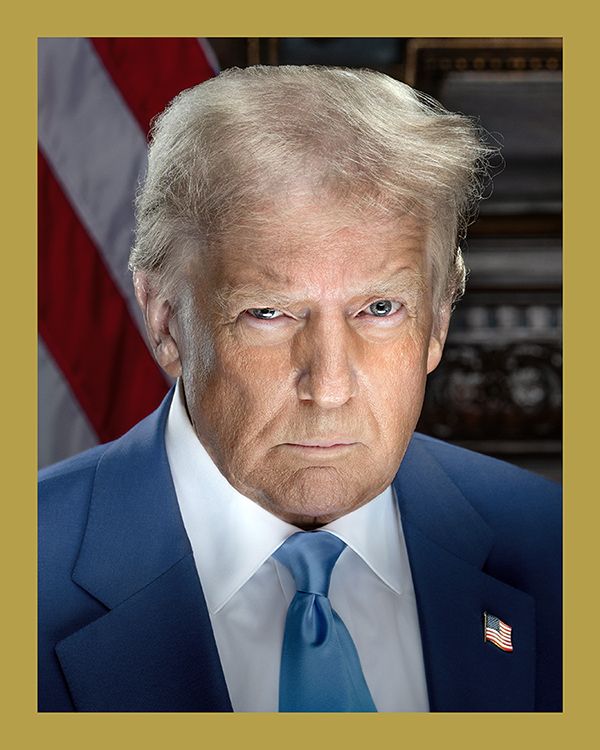
In the waning days of Donald Trump’s first term, frustration brewed inside the White House as the CIA’s cyber campaign against the Nicolás Maduro regime in Venezuela failed to produce the desired outcome. Now, with renewed political ambition and a more aggressive foreign policy posture, the United States appears to be shifting gears—flexing its military muscle across the Caribbean and South America to remind adversaries that Washington’s reach still extends deep into the hemisphere.
Covert Operations That Fell Short
Throughout Trump’s early presidency, Washington sought to unseat Maduro through a combination of diplomatic pressure, economic sanctions, and covert cyber operations. The CIA’s cyber division, backed by high-level support from the National Security Council, reportedly launched a series of targeted operations designed to disrupt Venezuela’s oil export systems and weaken the country’s command-and-control networks.
However, intelligence insiders revealed that Maduro’s government, backed by Russian cybersecurity advisors and supported by Chinese surveillance technology, quickly fortified its networks. The cyber strikes produced limited results, causing only temporary disruptions to state-run oil company PDVSA and minor confusion within military communication systems. For Trump, this failure underscored the limitations of digital warfare in achieving regime change.
Trump’s Frustration and a Shift Toward Military Posturing
By late 2020, Trump’s national security advisors proposed a bolder approach. While direct military intervention remained politically risky, symbolic displays of power were seen as necessary to restore U.S. dominance in Latin America—a region increasingly influenced by Moscow and Beijing.
In recent months, Pentagon officials have confirmed an increased presence of U.S. naval assets near Venezuelan waters. Joint military exercises with Colombia and the deployment of surveillance aircraft over the Caribbean have fueled speculation that Washington is preparing for a more direct confrontation.
A senior defense analyst noted, “These movements are not just drills—they’re strategic messaging. The U.S. wants to remind Maduro that his defiance has consequences.”
Maduro’s Defiance and Global Alignments
Nicolás Maduro has responded with characteristic bravado. During a televised address, he accused the U.S. of pursuing “imperialist aggression” and vowed to strengthen alliances with Russia, China, and Iran. Reports suggest that Russian military advisors remain active in Caracas, bolstering Venezuela’s anti-air capabilities and training intelligence units.
Meanwhile, Chinese firms continue to supply surveillance and telecom infrastructure to Venezuela, effectively creating a digital shield against further cyber infiltration. The result is a geopolitical standoff where covert tactics have given way to overt displays of strength.
Washington’s Renewed Focus on Hemispheric Power
The Biden administration initially softened its stance on Venezuela, favoring diplomatic engagement. But as Trump’s potential return looms and right-wing voices push for renewed assertiveness, the U.S. military’s posture in the region has grown noticeably firmer. Recent reports indicate that new intelligence-sharing agreements between Washington and Colombia are being fast-tracked, aimed at curbing Venezuelan drug trafficking and monitoring Chinese and Russian influence in the region.
Observers note that Trump’s foreign policy circle views Venezuela not just as an ideological enemy but as a proxy battlefield in the broader U.S.-China-Russia rivalry. The renewed emphasis on “hemispheric security” underscores a shift from cyber-based interference to traditional power projection.
The Road Ahead
While no official military action has been announced, U.S. naval maneuvers and intelligence flights signal that Washington is prepared to escalate pressure if diplomatic or cyber means fail again. As one former intelligence officer put it, “The message is simple: if the digital battlefield couldn’t change the regime, the show of force might.”
For Venezuela, this means living under the constant shadow of U.S. pressure. For Washington, it’s a test of credibility in a hemisphere it once dominated unchallenged—and a sign that cyber warfare may no longer be enough in the great power game of the 21st century.