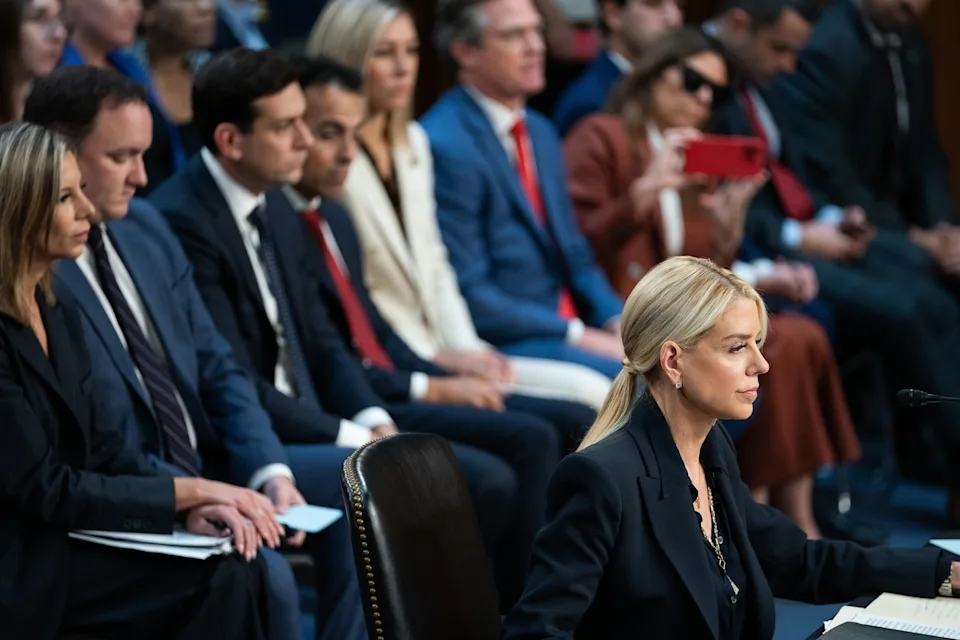
During a tense Senate hearing, former official Bondi rips Democratic senators, unleashing sharp criticism while skillfully dodging questions regarding the alleged “weaponization” of federal agencies and former ICE director John Homan. The hearing, marked by high drama and partisan clashes, has sparked national debate over accountability, government power, and political tactics.
Bondi Rips Democratic Senators: A Clash of Power and Politics
Bondi rips Democratic senators repeatedly during the hearing, accusing them of overreach and partisanship. The exchange quickly escalated as lawmakers pressed for answers on controversial decisions made during her tenure. Bondi, known for her combative style, defended her actions and the agencies involved, framing her critics as politically motivated and intent on undermining institutional authority.
The verbal sparring highlighted deep divisions in Congress. Republicans praised Bondi for standing her ground, while Democrats accused her of evading accountability. The confrontation showcased the tense environment of modern congressional hearings, where partisan politics often overshadow substantive discussion.
Dodging Questions on ‘Weaponization’ and Homan
A central point of contention was the alleged “weaponization” of federal agencies. Senators questioned Bondi on whether certain law enforcement actions were politically motivated or targeted specific individuals. Bondi rips Democratic senators in response, often steering the discussion away from direct answers, emphasizing procedural adherence and agency independence.
Additionally, lawmakers sought clarity regarding John Homan’s role in past operations. Bondi repeatedly deflected, citing confidentiality and internal protocols. Her ability to navigate tough questions without providing detailed answers frustrated many participants, but it also reinforced her reputation for strategic resilience in high-pressure hearings.
Political Implications of Bondi’s Testimony
The hearing’s outcome has implications beyond individual accountability. By publicly confronting Democratic senators, Bondi rips Democratic senators in a manner that underscores partisan polarization in Washington. Observers note that her testimony may strengthen her support among Republican constituents while deepening partisan divides in Congress.
Critics argue that dodging questions undermines transparency, raising concerns about checks and balances within government institutions. Supporters counter that Bondi’s defense of procedural norms and agency independence is necessary to maintain institutional integrity amid politically charged scrutiny.
Public Reaction and Media Coverage
News outlets and social media have amplified the hearing’s drama. Clips of Bondi ripping Democratic senators and dodging pointed questions have gone viral, fueling debate about the role of accountability versus political theater in congressional proceedings. The event has become a focal point for broader discussions about partisanship, oversight, and the boundaries of executive and legislative authority.
Legacy of the Hearing
While the immediate impact of Bondi’s testimony may be measured in headlines and soundbites, the long-term effects could influence congressional oversight practices and public perceptions of federal accountability. Her performance — assertive, strategic, and unapologetic — demonstrates how modern political hearings often serve as both arenas of accountability and platforms for partisan spectacle.