
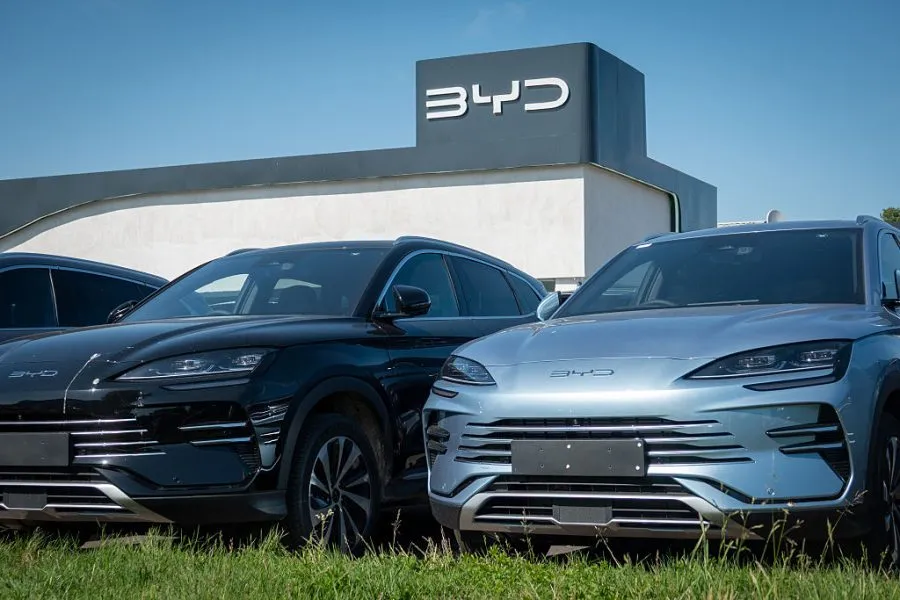
China has quickly emerged as the world’s largest electric vehicle (EV) market, producing millions of cars each year and setting the global pace for EV adoption. Yet, behind the dazzling sales numbers and growing international presence, the country’s auto sector is being rocked by a ruthless price war at home. While Chinese EV brands aim to conquer markets in Europe, Asia, and beyond, the domestic battlefield threatens to wipe out many of its weaker players.
The Rise of China’s EV Dominance
Over the past decade, China has built an unparalleled EV ecosystem. Backed by government subsidies, aggressive investments in battery technology, and a highly competitive manufacturing base, companies like BYD, NIO, XPeng, and Li Auto have become household names. According to recent industry estimates, China accounted for nearly 60% of global EV sales in 2024, surpassing the combined markets of Europe and the United States.
But rapid expansion has also created oversupply. Hundreds of EV startups mushroomed across the country, each hoping to carve out market share. Now, as government subsidies fade and consumer demand plateaus, fierce price competition is putting enormous pressure on profit margins.
The Tesla Effect and Price Wars
The first major tremor came when Tesla slashed prices for its popular Model 3 and Model Y in China, igniting a price-cutting spree across the industry. Domestic rivals had little choice but to follow suit. BYD, the largest EV maker in China, cut prices on its best-selling models. Smaller brands, desperate to keep up, began slashing their own.
What started as competitive adjustments quickly spiraled into a full-blown price war. Analysts warn that many weaker startups—already struggling with high costs and limited scale—may not survive. “The price war is unsustainable,” said one industry expert. “It will inevitably lead to consolidation, with only the strongest players remaining.”
Going Global to Survive
As the domestic market becomes oversaturated, Chinese EV brands are shifting focus abroad. Europe has become a key battleground. BYD, for example, has launched models in Germany, the UK, and France, offering vehicles priced significantly lower than Western competitors. Similarly, NIO has opened flagship stores in Norway and the Netherlands, betting on premium positioning.
Markets in Southeast Asia, the Middle East, and South America are also in the crosshairs. Chinese automakers see these regions as growth opportunities where EV penetration remains low but demand is rising. With competitive pricing and faster rollout of charging infrastructure, Chinese EVs are quickly winning over foreign consumers.
Challenges Abroad
Despite their momentum, Chinese automakers face hurdles overseas. European regulators have already launched investigations into whether Chinese EVs are benefiting from unfair state subsidies. Tariff risks loom large, especially as Western governments grow wary of China’s rapid export push. Brand perception is another challenge—many consumers still associate Chinese cars with lower quality, despite major improvements in design, safety, and technology.
The Future: Survival of the Fittest
The paradox of China’s EV boom is clear: at home, cut-throat price wars could cull many brands; abroad, opportunities for expansion seem limitless. Analysts predict that the domestic market will eventually consolidate around a handful of giants—most likely BYD, Tesla (which builds locally), and a few well-capitalized startups.
In the long run, China’s EV industry could emerge stronger and more globally influential, but the short-term turbulence is unavoidable. The next two to three years will likely determine which brands survive, which merge, and which vanish altogether.
For now, one thing is certain: China’s electric car revolution is no longer just a domestic story—it is a global one.