
Is curing Alzheimer’s an impossible mission, or is science edging closer to an answer? That question sits at the heart of today’s dementia research. With millions of families affected, the urgency continues to grow. While medications slow symptoms for some, none can stop or reverse the disease. To understand what might change, researchers are now looking directly inside the living brain.
Watching brain surgery offers a rare window into this effort. It shows how far science has come and how much remains unknown. More importantly, it reveals why researchers believe real progress is still possible.
Inside the Operating Theatre
Standing inside an operating theatre, the atmosphere feels calm yet intense. Machines beep steadily while medical staff move with practiced precision. Every step matters. The patient lies sedated, prepared for a complex procedure deep within the brain. Large screens display detailed scans, highlighting a tumour that requires careful access.
Because the tumour lies beneath the surface, surgeons must pass through the cortex. This outer layer controls memory, language, and thinking. Cutting through it requires extreme accuracy. Even the smallest mistake could affect cognition. Therefore, surgeons work slowly, balancing speed with caution.
As the skull is opened, the brain becomes visible. It appears pink and alive, gently pulsing with each heartbeat. This moment highlights how delicate and powerful the brain truly is.
Why Living Brain Tissue Changes Everything
In most operations, small sections of removed brain tissue would be discarded. However, some centres now preserve this tissue, with patient consent, for dementia research. This approach marks a turning point. Instead of relying only on scans or post-mortem samples, scientists can study living human brain cells.
Living tissue behaves differently from preserved samples. It still communicates, responds, and adapts. As a result, researchers can observe how neurons function in real time. This insight helps them understand how Alzheimer’s disrupts communication between brain cells long before memory loss becomes obvious.
From Surgery to the Laboratory
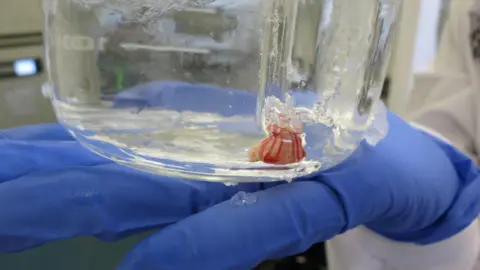
Once removed, the brain tissue is immediately placed into a special fluid designed to keep it alive. Time becomes critical. Researchers transport the sample quickly to a laboratory, where experiments begin within hours. Only minutes earlier, this tissue formed part of a person’s thoughts, emotions, and awareness.
This reality adds emotional weight to the science. Every sample represents trust and generosity. Researchers treat it with deep respect, knowing it was given during one of the most difficult moments of someone’s life.
What Scientists Hope to Discover
By studying living brain tissue, researchers aim to answer key questions. They want to know how Alzheimer’s damages connections between cells. They also want to understand why some neurons resist damage longer than others. These answers could guide future treatments.
In addition, scientists test how brain cells respond to stimulation. If damaged circuits can be reactivated or rerouted, it could lead to therapies that restore function rather than only slow decline. This shift would redefine Alzheimer’s care.
A Long Road, But Real Hope
Alzheimer’s remains one of the most complex neurological conditions. There will be no single breakthrough. Instead, progress comes through many small discoveries. Brain surgery plays a crucial role in that journey by providing direct evidence from the living brain.
While a cure does not yet exist, this work challenges the idea that Alzheimer’s is unbeatable. Each operation adds knowledge. Each experiment sharpens understanding. Together, they move science closer to answers once thought unreachable.
Looking Ahead
The fight against Alzheimer’s demands patience, precision, and courage. Watching brain surgery makes one thing clear: researchers are no longer guessing from a distance. They are studying the disease at its source. That shift fuels cautious optimism.
Alzheimer’s may still shape millions of lives today. However, with each step forward, the future looks less certain for the disease itself.