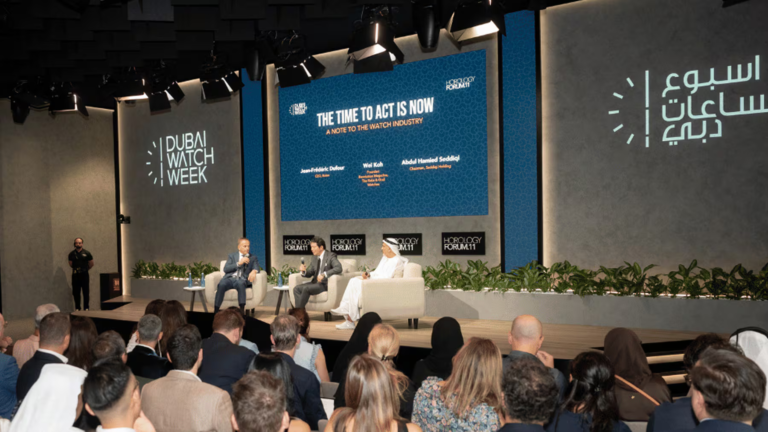
The global watch market continues to struggle. Demand has softened, and competition has grown tougher. In this tense environment, the leader of one of the world’s most influential watch brands made a rare and powerful public statement. He firmly rejected any push toward a retail-driven model. Instead, he highlighted the strength of the long-trusted wholesale system. His message surprised many, yet it reflected confidence in traditional structures.
Moreover, his words resonated deeply across the sector. Many companies face falling sales and unpredictable buying patterns. So, his call for unity struck an emotional chord. He stressed that cooperation, not panic, will help the industry move forward.
Wholesale Model Remains the Heart of the Strategy
The CEO spoke with clarity. He confirmed that the brand will not shift toward direct-to-consumer retail. He emphasised that the wholesale network has supported the company for decades. It has built consistency, trust, and long-lasting relationships. According to him, this model still works. It offers stability during market turbulence.
Furthermore, he stated that distributors and authorised sellers remain essential. They represent the legacy and values of the brand. They also uphold the quality of customer experience that the company prizes. This steady, partnership-driven structure continues to guide the brand’s global presence.
A Call for Unity Across the Watch Sector
The CEO went beyond defending his strategy. He urged the entire industry to come together. He acknowledged that many watchmakers are struggling. Sales have dropped in several regions. Consumer confidence is shifting. Trends change faster than before. Because of this, he encouraged watch companies to focus on resilience rather than rivalry.
In addition, he reminded industry leaders that internal competition weakens everyone. Collaborative thinking could strengthen supply chains, refine standards, and restore global appeal. He made it clear that unity can help rebuild momentum during a downturn.
Market Downturn Forces Strategic Re-Evaluation
The luxury watch sector is undergoing major change. Economic uncertainty affects purchase decisions. Many customers delay buying high-value items. Meanwhile, pre-owned markets grow rapidly, reshaping price expectations. These factors pressure traditional brands.
Therefore, several companies are exploring retail models to control sales more closely. However, the Rolex CEO believes that such a move may harm long-time partners and disrupt brand culture. He argued that change should happen with caution. According to him, stability must come before experimentation.
Rolex’s Steady Philosophy Stands Out
Despite the chaos around them, the brand maintains a consistent philosophy. Its focus is precision, heritage, and trust. This approach sets it apart. While others chase new trends, Rolex protects its foundation. The CEO’s statement reinforces this vision.
Still, many analysts see the speech as a strategic signal. The brand may prepare for future adjustments. Yet for now, it stands firm. It prefers long-term balance over short-term reaction.
What Comes Next for the Swiss Watch World
The CEO’s message marks a defining moment. The industry faces a tough period, yet his confidence provides a sense of direction. As watchmakers rethink distribution, pricing, and consumer engagement, Rolex’s stance becomes a reference point.
In the coming months, market conditions may evolve. Nevertheless, unity, resilience, and strategic caution are likely to shape the future. Rolex’s refusal to jump into retail shows its belief in legacy rather than pressure. And that belief, according to the CEO, will guide them through uncertainty.