
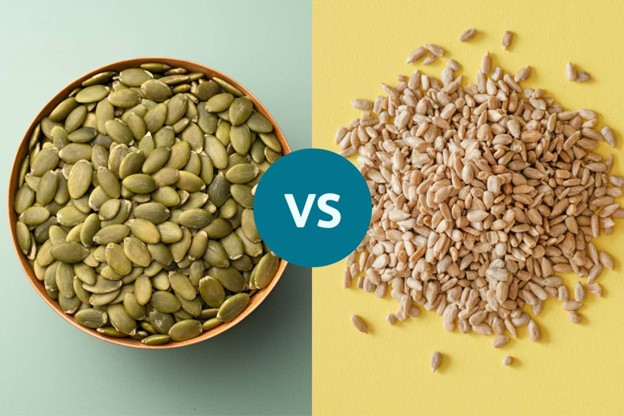
Both pumpkin and sunflower seeds are small but mighty nutritional powerhouses. Packed with protein, fiber, and essential fats, they offer numerous health benefits. However, choosing between them depends on your dietary goals and nutrient needs. While both support heart and brain health, each has unique advantages that make it stand out.
Nutritional Breakdown
Pumpkin seeds, also known as pepitas, are rich in protein, iron, magnesium, and zinc. They offer plant-based omega-3 fatty acids and antioxidants that fight inflammation. A small handful provides long-lasting energy and supports muscle recovery after exercise.
Sunflower seeds, on the other hand, are high in vitamin E, selenium, and healthy unsaturated fats. These nutrients protect cells from oxidative stress and promote glowing skin. They are slightly lower in protein than pumpkin seeds but make up for it with higher vitamin content.
Protein and Energy Comparison
If you’re looking for a protein boost, pumpkin seeds take the lead. They provide around 7 grams of protein per ounce, compared to about 5 grams in sunflower seeds. This makes them ideal for vegetarians and athletes seeking plant-based protein. Moreover, their iron and magnesium content helps improve stamina and reduce fatigue.
Sunflower seeds, though lower in protein, are an excellent source of energy. Their healthy fats support brain function and sustained focus. A small serving can keep hunger at bay and reduce cravings throughout the day.
Heart Health and Good Fats
Both seeds contain healthy unsaturated fats that lower bad cholesterol levels. However, sunflower seeds are richer in linoleic acid, a type of omega-6 fat that promotes heart health when consumed in moderation. Pumpkin seeds offer a better omega-3 to omega-6 balance, reducing inflammation and supporting blood vessel health.
For heart-conscious eaters, mixing both seeds in salads or smoothies can create a nutrient-balanced snack. This combination supports blood circulation, lowers cholesterol, and stabilizes blood pressure naturally.
Minerals and Immune Support
Pumpkin seeds shine when it comes to minerals. They are an excellent source of magnesium, zinc, and manganese, which strengthen bones and support immunity. Zinc is particularly beneficial for wound healing and hormone regulation.
Sunflower seeds excel in vitamin E, an antioxidant that protects skin and cells from damage. They also contain selenium, which works with vitamin E to boost the immune system. Together, they help the body fight infections and stay resilient during stress.
Weight Management and Digestion
Both seeds aid weight management when eaten in moderation. Their fiber keeps you full for longer and improves digestion. Pumpkin seeds may offer a slight advantage due to higher protein content, which supports muscle growth and fat metabolism.
However, portion control matters. Overeating either seed can add unnecessary calories. A serving of one or two tablespoons daily is ideal for maintaining balance without overloading on fat or calories.
The Verdict
Both pumpkin and sunflower seeds are excellent for overall health, but pumpkin seeds win by a small margin. Their superior protein, iron, and magnesium levels make them slightly more beneficial for energy, immunity, and heart health. Sunflower seeds remain a great option for vitamin E and healthy fats, especially for skin and cellular repair.
Including both in your diet ensures you get the best of both worlds. Whether sprinkled on yogurt, mixed into salads, or blended in smoothies, these seeds can elevate your nutrition and help you stay healthy year-round.
Final Thoughts
Tiny but powerful, pumpkin and sunflower seeds prove that big nutrition can come from small sources. When eaten in balance, they can support heart, brain, and immune health effortlessly. The secret lies in variety—mix them, roast them lightly, and enjoy their crunch daily for a wholesome, nutrient-packed diet.