
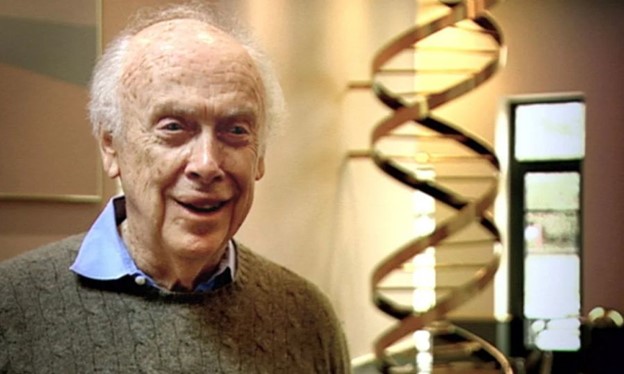
James D. Watson, one of the key figures behind the discovery of the DNA double helix, has died at the age of 97. His passing marks the end of an era in molecular biology and genetics. Watson’s groundbreaking work transformed how humanity understands the very code of life, shaping modern medicine, biotechnology, and evolutionary science.
Early Life and Education
Born in Chicago in 1928, Watson showed an early fascination with science. He studied zoology at the University of Chicago and later pursued a Ph.D. in zoology at Indiana University. His academic journey led him to the Cavendish Laboratory in Cambridge, where his curiosity about the structure of DNA took shape.
The Discovery That Changed Science
In the early 1950s, Watson, along with fellow researcher Francis Crick, uncovered the now-iconic double helix structure of DNA. Their model revealed how genetic information is stored and replicated in every living organism. This monumental discovery laid the foundation for genetics, revolutionizing biology and leading to vast advances in medicine, agriculture, and forensic science.
Their finding was more than just a scientific milestone—it was a turning point in human history. It opened doors to genetic engineering, genome sequencing, and understanding hereditary diseases. Their collaborative efforts earned them a Nobel Prize, cementing their place in scientific history.
Legacy Beyond the Laboratory
Watson’s influence extended beyond his lab work. He became a passionate advocate for genetics research, contributing to the development of the Human Genome Project. His leadership helped drive forward a new generation of scientists exploring the molecular foundations of life.
Throughout his career, Watson published several influential books, including The Double Helix, which offered an insider’s view of scientific discovery. The book became both controversial and iconic for its candid portrayal of the race to decode DNA’s secrets.
Controversy and Later Life
Despite his towering achievements, Watson’s career was not without controversy. His outspoken remarks on various social and scientific issues drew criticism over the years. However, his scientific contributions remained undeniable, continuing to influence generations of geneticists and molecular biologists.
In his later years, Watson devoted his time to promoting science education and genetic research, often reflecting on the responsibilities that come with scientific discovery. Even as debates surrounded his views, his pioneering role in molecular biology remained an indelible part of history.
The End of an Era
With Watson’s passing, the world bids farewell to one of the most influential scientists of the 20th century. His vision reshaped the way we understand human life, heredity, and evolution. Today, the double helix stands as a universal symbol of life and discovery—a lasting tribute to the man who helped reveal its form.
Watson’s work continues to echo in every modern laboratory and medical innovation. From gene therapy to DNA-based diagnostics, his discovery remains at the heart of science’s greatest advancements. His death reminds the world that while a life may end, a legacy built on discovery can live forever.